

Meet the Creatures of Habit: 7 Hidden Forces Behind Behaviour
Most people think behaviour change is about motivation or a clever incentive. The truth is more everyday than that. We are creatures of habit. We pay attention to some things and ignore others. We copy people we like. We stall when something feels risky. Those patterns show up again and again, so I gave them names you can remember. Meet the Creatures of Habit.

Routine
The pull of what you always do. Habits save energy. If a new behaviour does not hitch a ride on something you already do, Routine will quietly drag you back to normal.

Resistance
The hassle detector. If it looks like work, it loses. People default to the easy path, especially when days are busy and brains are tired.

Prominence
The spotlight. Out of sight means out of mind. If a behaviour is not visible, rewarding, or cued at the right moment, it will not happen.

Scrutiny
The inner analyst. Doubt pauses action. People want to know what works, why it matters, and how to do it right before they commit.

Obedience
The rules and expectations. Clear guidance, credible voices, and gentle accountability help people act with confidence.
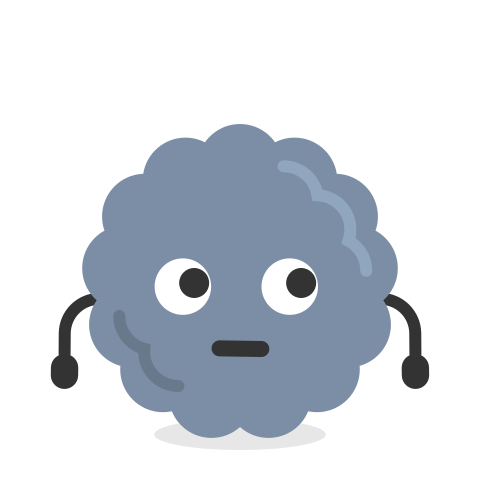
Influence
The social mirror. If people like me do it, I am more likely to do it too. If nobody in my circle does, it feels risky.
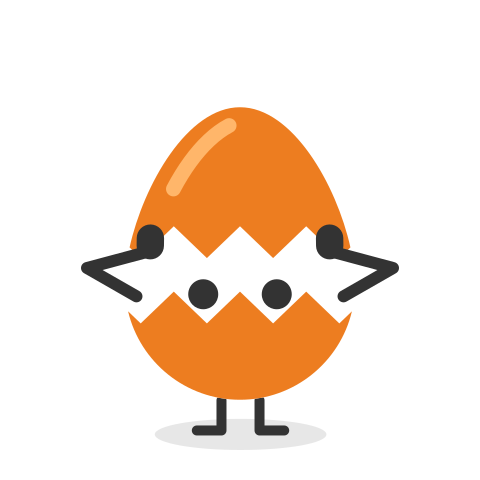
Inhibition
The hidden hesitation. Even with intent, people hold back. Fear of getting it wrong, perfectionism, and low confidence create invisible brakes.
Why this matters
Once you can name what you are seeing, you can design for it. Instead of guessing, you work with human nature. The result is better ideas, less waste, and change that sticks.
Try this quick check on your current project:
– What routine can this behaviour attach to so it feels natural, not bolted on?
– Where is the friction that makes people shrug and say maybe later?
– What will make the behaviour stand out at the exact moment it is needed?
– What proof or clarity would remove doubts?
– Whose voice or rule gives people permission to act?
– Who are the right peers to model it?
– What would make a first try feel safe, even if imperfect?
If you want help spotting the Creatures in your challenge, request a free Behavioural Challenge Snapshot. I will review what you share and send back tailored insights, quick wins, and practical next steps.